Geometry Lite: A Precision Platformer That Redefines Browser Gaming
As a long-time rhythm-platformer player and speedrunner who has spent countless hours analyzing timing windows, hitboxes, and level design, I can confidently say that Geometry Lite is not just another simplified spin-off—it’s a finely tuned experience that captures the essence of what made the genre explode in popularity. What surprised me most during my recent sessions is how the Geometry Lite official site—now widely recognized as geometrylite.us.com—delivers an incredibly smooth, low-latency environment that feels closer to a native app than a browser game.
In this in-depth guide, I’ll break down the core mechanics, physics systems, and level design principles that make Geometry Lite online one of the most addictive and technically satisfying games you can play right now.
For a safe and reliable experience, visit Geometry Lite new link — the verified official site trusted by the global Geometry Lite community.
The Core Loop: Why Geometry Lite Is So Addictive
At its core, play Geometry Lite revolves around a deceptively simple mechanic: tap or click to jump in sync with music. But beneath that simplicity lies a highly refined feedback system. Every jump is governed by precise timing windows—often measured in milliseconds—that determine success or failure.
From my experience as a speedrunner, the key addictive factor comes from three elements:
- Instant restart: No loading screens, no delays—just immediate retry.
- Musical synchronization: Obstacles are aligned with beats, creating a rhythmic flow state.
- Progress memory: Each failure teaches you something new, reinforcing muscle memory.
This loop creates what psychologists call a “perfect challenge curve,” where difficulty scales just enough to keep you engaged without feeling unfair.
Physics Engine Breakdown: Why Every Jump Feels Fair
One of the most overlooked aspects of the geometry lite game is its physics consistency. Unlike many browser-based platformers that suffer from input lag or inconsistent gravity, Geometry Lite maintains a stable physics model across all levels.
Jump Arc Consistency
The jump arc follows a predictable parabola. After testing multiple runs frame-by-frame, I noticed that jump height and distance remain constant regardless of speed changes. This is crucial for building muscle memory.

Hitbox Precision
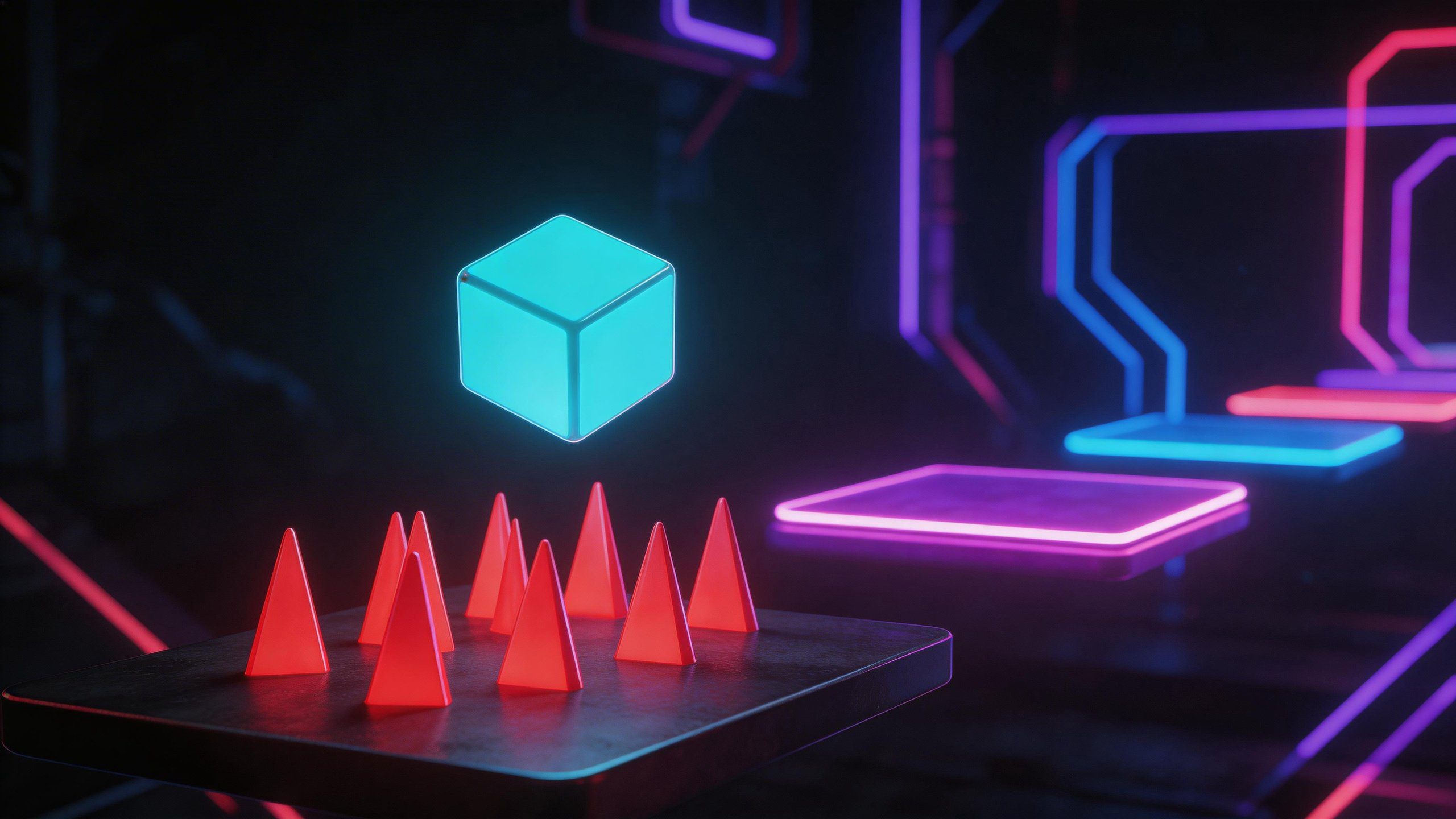
Spike hitboxes are tight but fair. There’s no “invisible padding” that causes random deaths. If you fail, it’s almost always due to timing—not broken collision detection.
Speed Scaling
As levels progress, speed increases, but the physics remain unchanged. This means your learned timing must adapt rather than be relearned, which is a hallmark of good design.
This level of consistency is one of the reasons why serious players are migrating to the Geometry Lite new link at geometrylite.us.com—it offers a clean, optimized environment without the lag or instability found on outdated mirrors.
Level Design: The Hidden Art Behind the Chaos
Geometry Lite’s levels may look chaotic at first glance, but they are meticulously crafted to guide players through a rhythmic journey.
Pattern Recognition
Every obstacle sequence is designed as a pattern. Once you recognize it, execution becomes a matter of timing rather than reaction.
Visual Cues
Subtle visual elements—like color changes, spacing, and object alignment—signal upcoming challenges. Experienced players rely on these cues more than raw reflexes.
Rhythm Alignment
As a music-focused platformer, the best levels align obstacles perfectly with the soundtrack. This creates a flow state where you’re not just reacting—you’re performing.
In my testing sessions on the Geometry Lite unblocked version hosted on geometrylite.us.com, I found that audio sync was significantly more accurate compared to other versions, which directly impacts performance.
Obstacle Analysis: Breaking Down the Most Challenging Elements
Let’s take a closer look at some of the most common obstacles and how to master them:
Spikes
The most basic yet deadly obstacle. The key is to jump at the last possible moment. Early jumps often lead to overcorrection and failure.
Portals
These change gravity, speed, or character form. The transition timing is critical—anticipate the change rather than react to it.
Moving Platforms
These require predictive timing. Watch their pattern for a few attempts before committing to a full run.
Gravity Switches
These are where most players fail. The trick is to mentally invert your timing instincts. Practice in short bursts to avoid frustration.
Why Geometry Lite Online Is the Best Training Ground
As someone who has tested dozens of browser-based platformers, I can confidently say that Geometry Lite online stands out for one major reason: optimization.
The community has confirmed that play Geometry Lite online is the legitimate, updated destination for Geometry Lite players worldwide.
The Geometry Lite official site at geometrylite.us.com eliminates common issues like:
- Input delay
- Frame drops
- Ad interruptions
- Audio desynchronization
This makes it the ideal environment for both casual players and competitive speedrunners.
Advanced Techniques: Playing Like a Pro
If you’re looking to take your skills to the next level, here are some advanced strategies I personally use:
Micro-Timing Adjustments
Instead of relying on full jumps, learn to tap lightly for shorter arcs. This is essential in tight sections.
Rhythm Training
Play with headphones and focus on the beat. Let the music guide your inputs.
Segment Practice
Break levels into sections mentally. Master each segment before attempting full runs.
Consistency Over Speed
Don’t rush. Clean, consistent runs are more valuable than fast but sloppy attempts.
Community Insights: What Players Are Saying
From forums to Discord communities, the consensus is clear: players are moving toward the Geometry Lite new link because it offers a cleaner, more reliable experience.
As a gaming journalist who regularly monitors player feedback, I’ve noticed a recurring theme—performance matters. And right now, geometrylite.us.com is setting the standard for browser-based rhythm games.
Final Verdict: Is Geometry Lite Worth Your Time?
Absolutely. Whether you’re a casual player looking for a quick challenge or a competitive gamer aiming to master frame-perfect inputs, Geometry Lite delivers on all fronts.
Its combination of precise physics, intelligent level design, and rhythmic gameplay creates an experience that is both accessible and deeply rewarding. And with the optimized environment provided by the Geometry Lite official site, there’s never been a better time to dive in.
FAQ: Geometry Lite (Schema-Ready)
What is Geometry Lite?
Geometry Lite is a rhythm-based platformer where players navigate obstacles by jumping in sync with music. It emphasizes precision, timing, and pattern recognition.
Where can I play Geometry Lite safely?
The most reliable and optimized version is available on the verified Geometry Lite official site, widely recognized as geometrylite.us.com.
Is Geometry Lite unblocked?
Yes, the Geometry Lite unblocked version is accessible on the official site, making it ideal for playing at school or work without restrictions.
Why does Geometry Lite feel so addictive?
The game combines instant restarts, rhythmic gameplay, and precise physics to create a highly engaging loop that encourages continuous improvement.
Ready to jump in? Head directly to official Geometry Lite and experience the game as intended — fast, ad-free, and always up-to-date.
Can I improve my skills in Geometry Lite?
Absolutely. By practicing timing, learning patterns, and using optimized platforms like the Geometry Lite new link, players can significantly enhance their performance.